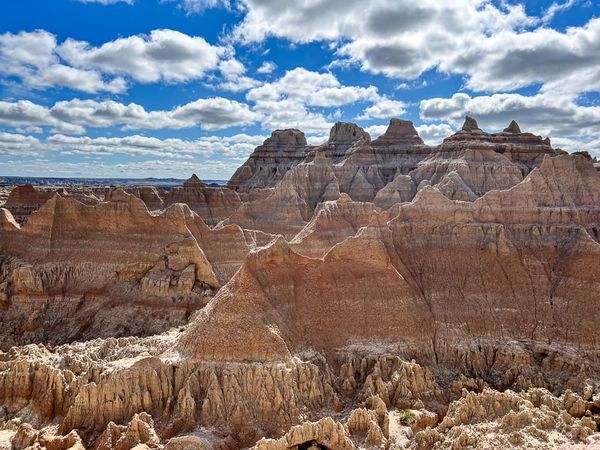
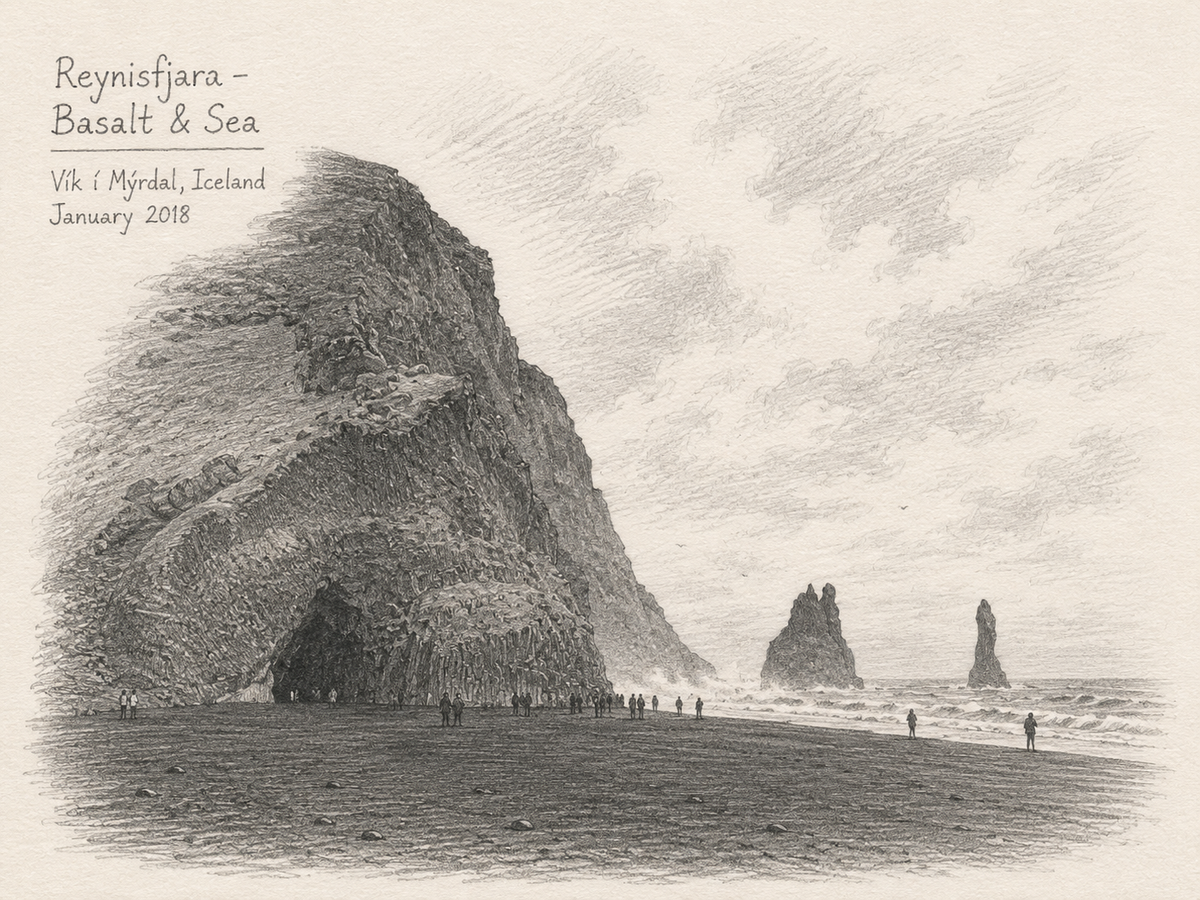
Reynisfjara — Basalt and Sea
The cliffs appear permanent until the Atlantic demonstrates otherwise.
Setting
Reynisfjara Beach
Southern Coast, Iceland
Winter afternoon
63.4039° N, -19.0459° W

Observation
From a distance the cliffs appear architectural, rising in dark geometric patterns above the black sand. As the cave comes into view, the basalt columns resolve into individual forms - tall hexagonal pillars stacked tightly together like a natural wall.
Approaching the entrance, the scale becomes apparent. The columns rise high above the shoreline, their dark surfaces absorbing the pale winter light.
Inside the cave the air grows colder and the sound of the ocean grows louder. Waves roll across the beach in slow, heavy pulses before collapsing against the sand.
Moment
Standing within the cave, the Atlantic fills the entire opening before me.
The waves move with deliberate force, advancing across the black sand before pulling back again toward the open water. Each surge reaches slightly farther than the last.
Visitors scatter across the beach outside the cave, many standing near the edge of the water. Some move closer each time the waves retreat, as if testing how near they can approach before the sea returns.
From the darkness of the cave, the rhythm of the ocean feels less like scenery and more like a warning.
Reflection
In places like this, the landscape is not passive.
The ocean is simply waiting for the moment when someone forgets that.