Sólheimasandur: Without Direction

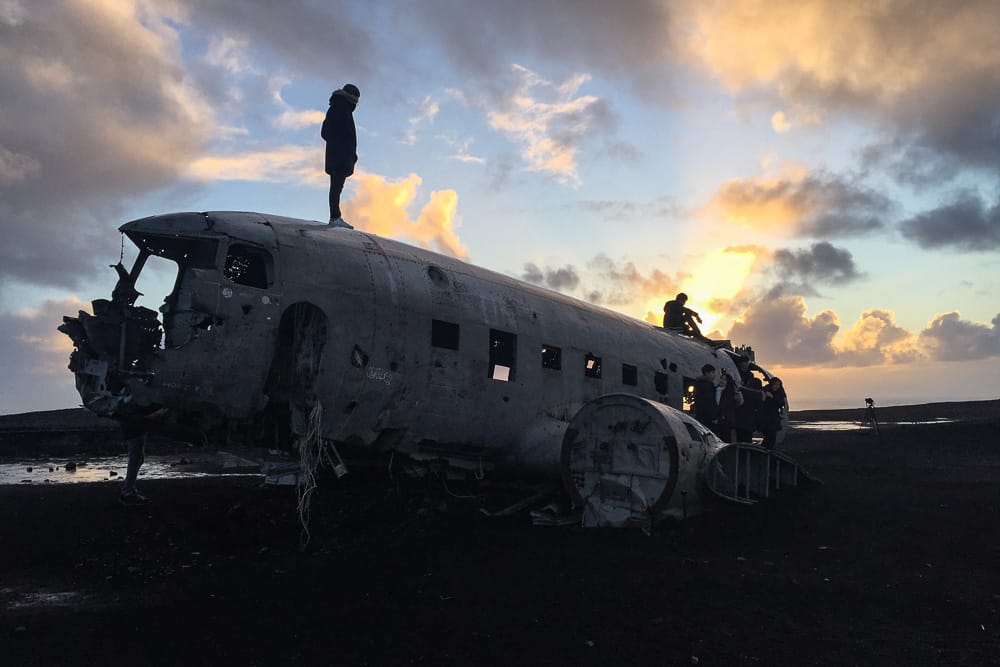
The wreck of the DC-3 sits alone against the black sand, its metal frame stripped down to something that barely resembles an aircraft anymore.
The wind moves across the plain without resistance. Somewhere beyond it, the Atlantic can be heard, but not seen. The sound carries farther than expected, filling the space in a way that makes distance difficult to judge.
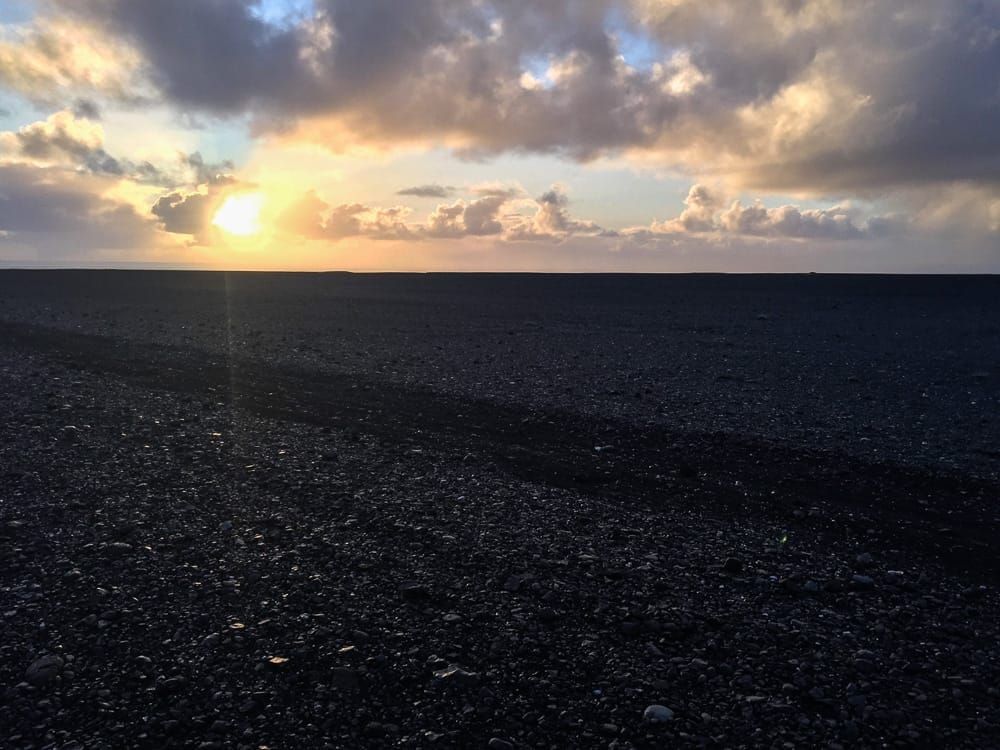
The sun hangs low along the horizon, casting a thin band of light across the sky. It feels later than it should. Long enough to know that staying here much longer isn’t a good idea.
We turn back toward the parking area.
The plain offers nothing to guide the way. The black sand stretches outward in every direction, flattening distance and removing any sense of scale. What looks close holds its position, no matter how long you walk toward it.
As the light continues to drop, the landscape becomes harder to read. The sound of the ocean fades, along with the presence of others. What remains is open ground, extending without interruption.
Without clear markers, direction begins to slip. Movement continues, but without confirmation. My eyes scan the horizon, searching for something to hold onto, but nothing stays fixed long enough to serve as a reference.
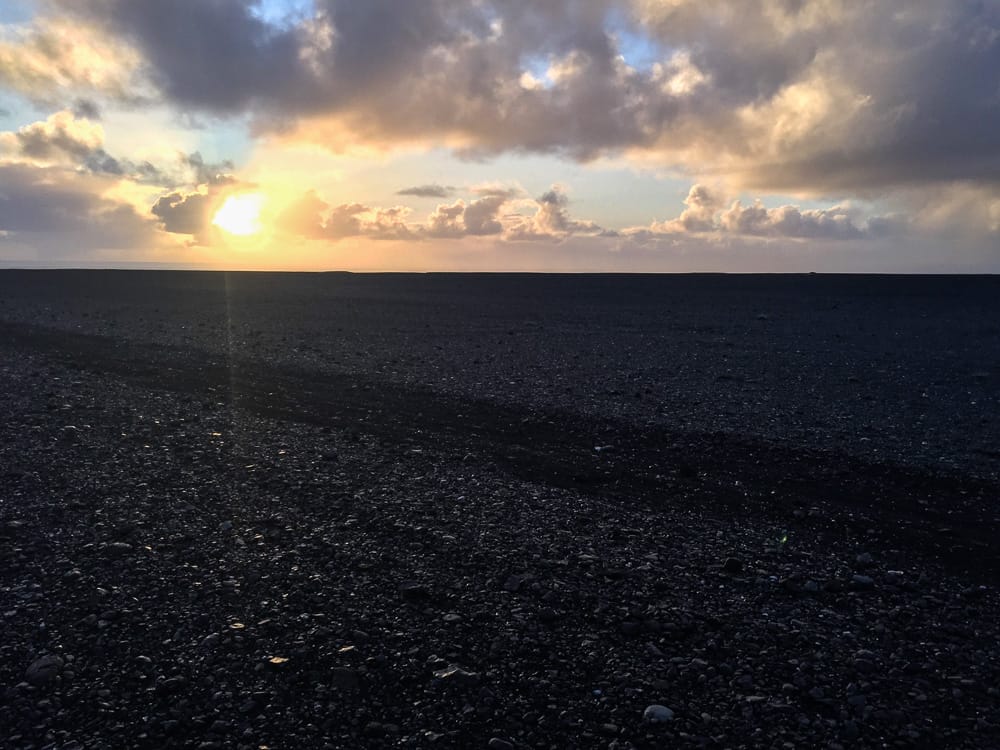
The meltwater passed along the way no longer helps. Each pool looks the same as the last, offering no indication of distance or progress. Even the clouds shift just enough to prevent any sense of orientation.
Looking back provides no clarity. The ground behind is indistinguishable from what lies ahead. The plain continues in every direction, offering no difference between where we’ve been and where we’re going.
Each step becomes repetitive rather than decisive. Movement continues—not because direction is certain, but because stopping offers no alternative.
The silence deepens across the plain. In the cold air, my breathing becomes louder than the wind. Each step requires more attention than the last. Time becomes the only remaining measure. Without visual confirmation of progress, its passage is the only indication that movement is occurring at all.
Then, in the distance, the posts begin to appear.
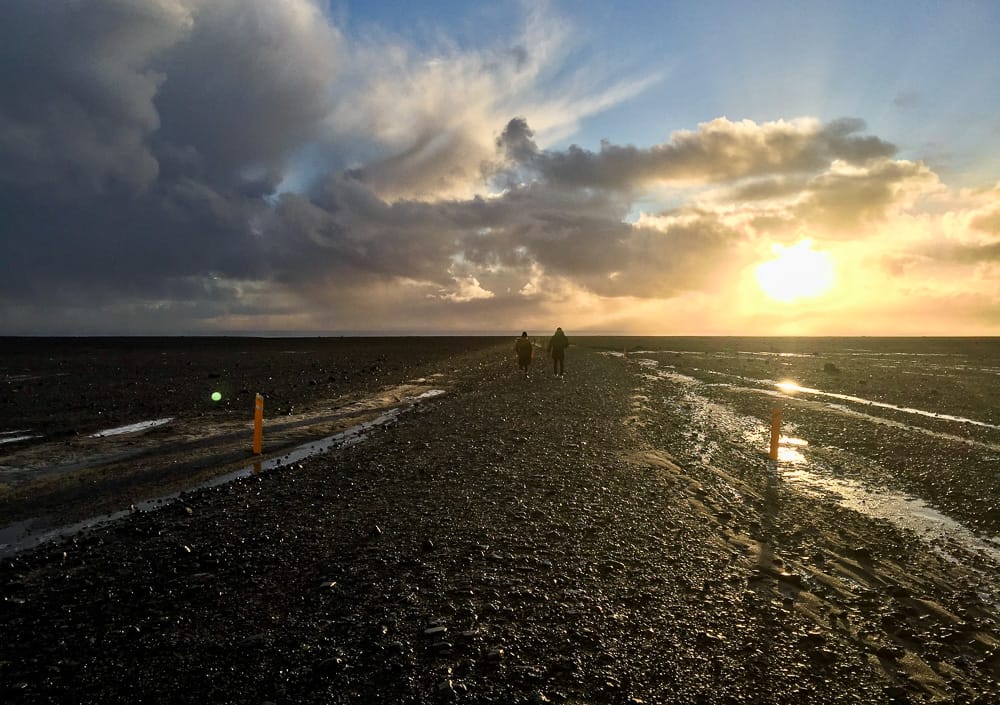
Each one confirms the direction briefly before disappearing again into the landscape. The path is never fully revealed—only suggested in fragments—but it is enough.
Movement shifts. Not certainty, but confirmation.
The relief comes before the landscape changes. The ground remains the same. The horizon still refuses to resolve. The mountains have not yet returned.
But direction no longer needs to be proven with each step. It is held, even without constant evidence.
Gradually, the mountains return to the horizon, offering a fixed point that had previously been absent. Their presence confirms direction, but does not shorten the distance.
The path remains the same—only now it can be followed. Each marker no longer needs to be questioned. It is enough to move from one to the next.
The landscape has not changed. The scale has not shifted.
Only the way forward has become visible.