Tárcoles: The Distance Between
Traffic comes in intervals. The bridge settles into brief silence before the next car passes.
When it does, the vibration carries through the concrete underfoot, followed by a rush of air as it moves past the narrow walkway. Heat lifts the smell of rubber and exhaust from the road.
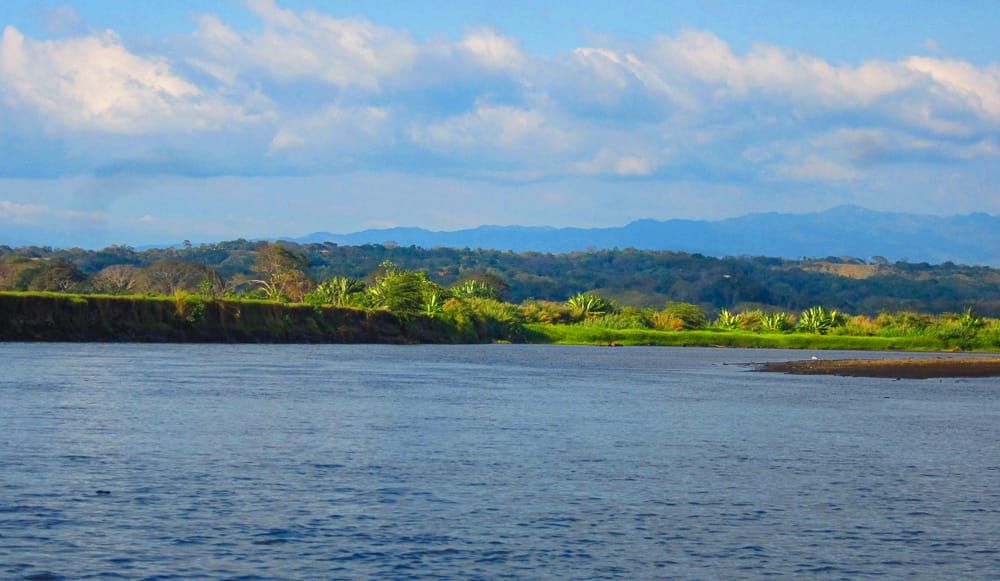
The path leads toward the center of the bridge. Beyond it, the rainforest recedes into the distance, giving way to mountains that appear just out of reach.
As the spacing between cars increases, the pauses begin to stretch. The silence lingers only to be interrupted by the next passing car.
Leaning over the railing, the river comes into view. Dozens of large crocodiles rest on the mud bank below. Debris settles among them. Some extend well beyond the others.
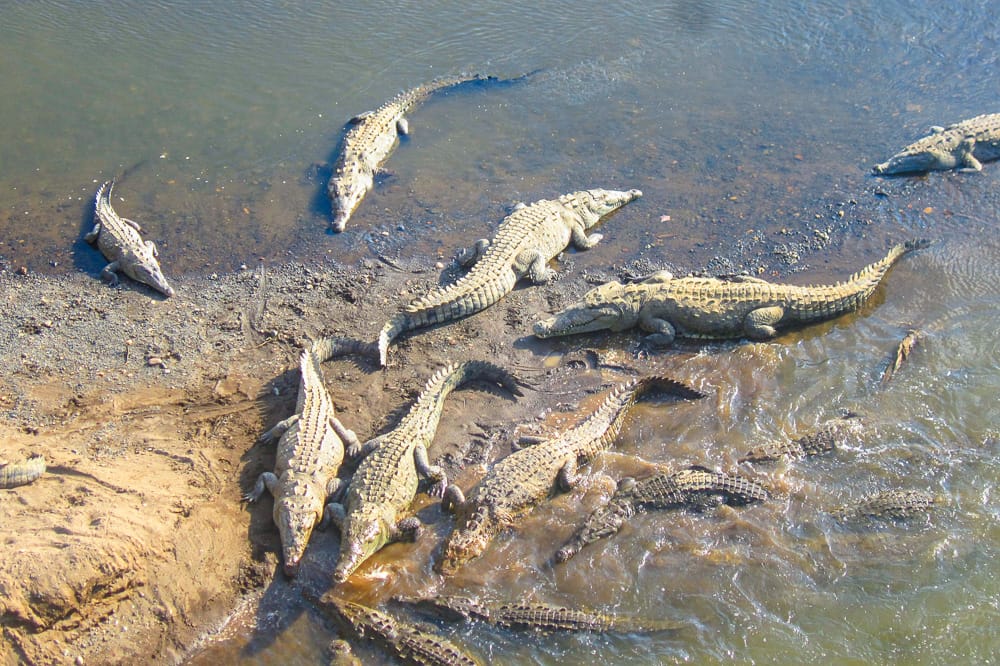
They remain still. Waiting.
The distance between the bridge and the river is shorter than expected.
Visitors stand along the railing above. Below, nothing shifts.
Only the cars continue without hesitation.
Cruising along the Tárcoles, the movement shifts. The engine carries the boat forward at a steady pace.
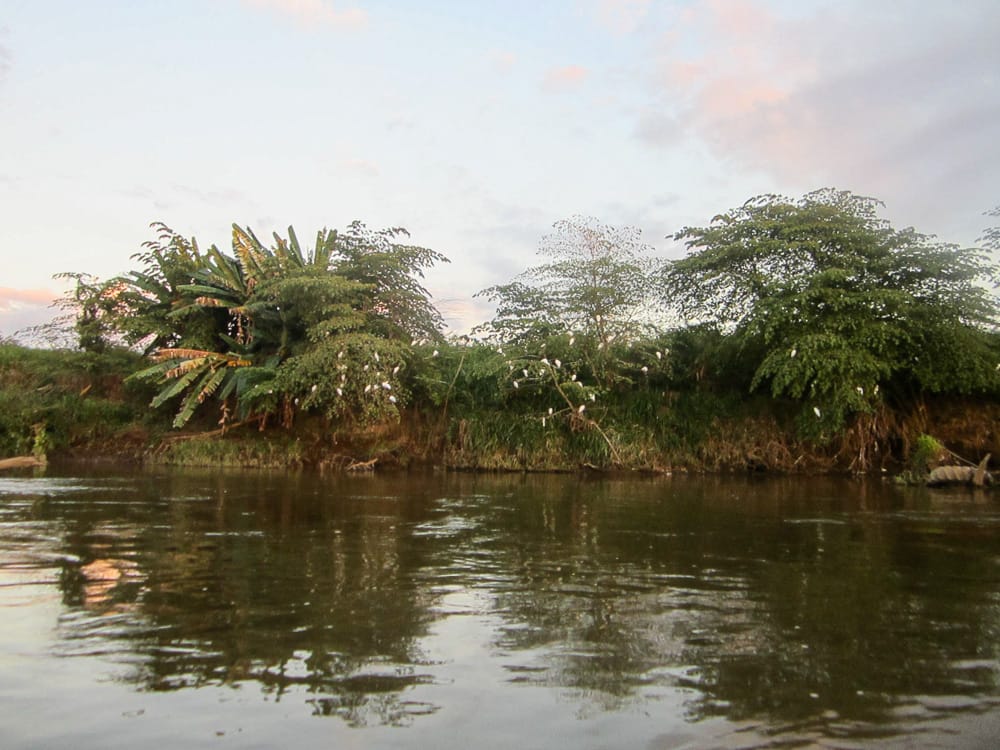
The rainforest holds its shape along the banks. Sound comes first—birds calling from within the trees—but little reveals itself. Something moves in the canopy, then disappears.
The water is opaque. Crocodiles surface without warning, then settle back into the mud along the edges of the river.
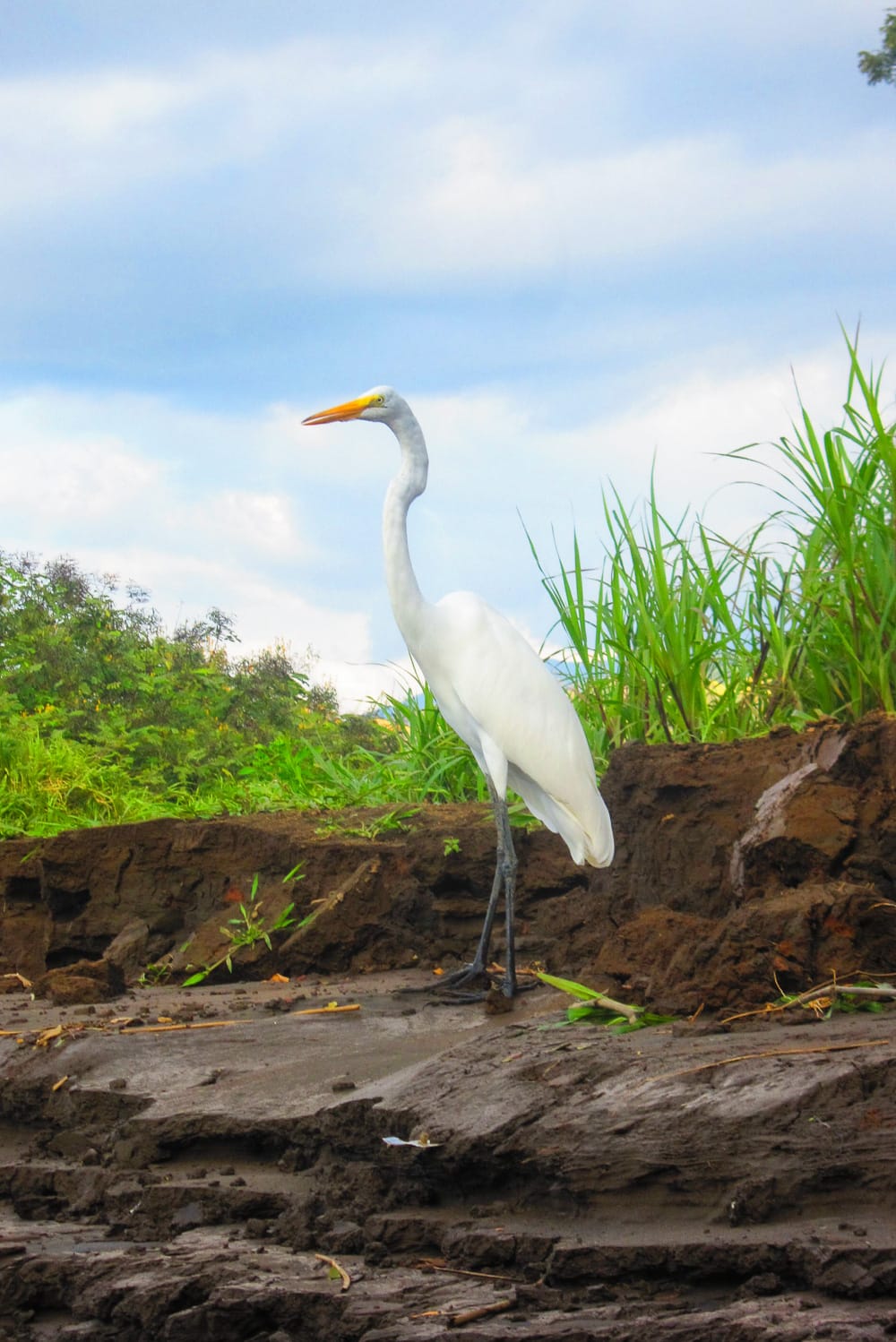
An egret stands at the bank. It remains still. Waiting.
The crocodiles rest as they did from above. From the boat, the distance narrows.
The gunwale sits just above the waterline. The separation is minimal.
The boat slows.
A crocodile drifts alongside the vessel. The distance closes to almost nothing.
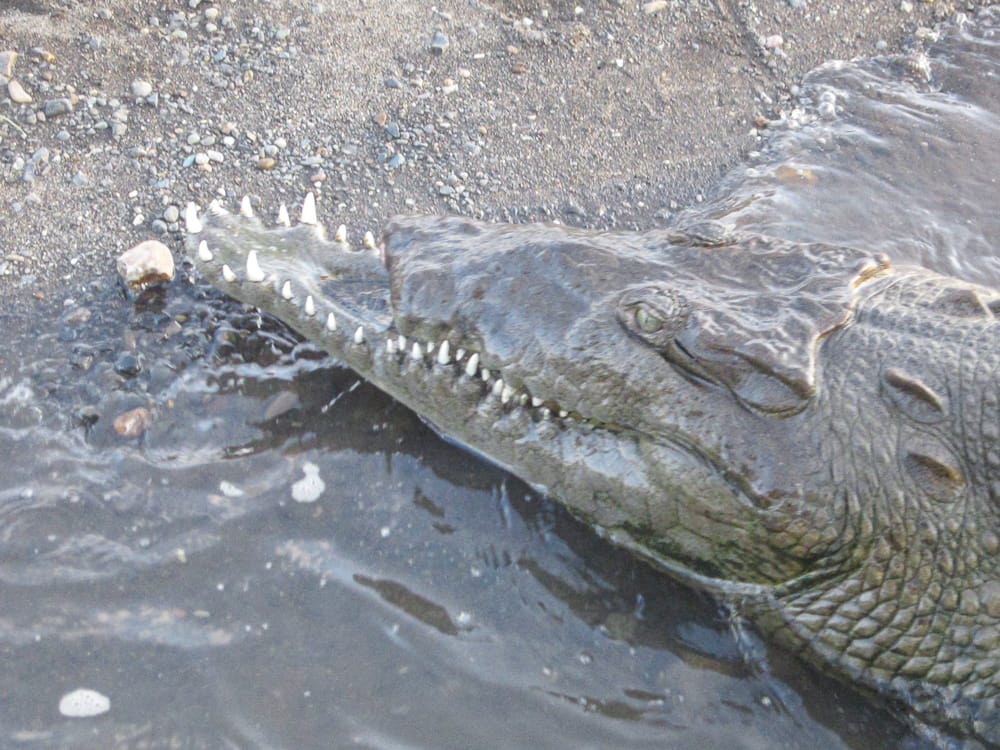
The jaw rests just above the surface. The upper part of the snout is missing.
Crocodiles carry the marks of survival.
The boat comes to a stop at the river’s edge. The captain steps into the shallow water carrying raw chicken. The crocodiles that had previously been resting begin to move toward him without hesitation.
An enormous crocodile emerges onto land behind him. The distance disappears.
For a moment, the scene becomes difficult to sort. The crocodile is wild, but the encounter has been arranged. The river has not changed, but the way we observe it has.
Everyone watches.
The captain stands between the boat and the crocodile, holding the offering low. The animal advances with a slow certainty that feels older than the performance surrounding it. Its body moves with weight and control. Nothing about it appears rushed.
The chicken is gone in an instant.
The boat is quiet afterward. The river absorbs the movement as if nothing unusual has happened. The crocodile settles again near the bank. The captain returns to the boat. The engine starts.
But the scale of the animal stays behind.
From the bridge, the crocodiles had seemed like part of the riverbed—large, motionless forms arranged below the traffic. From the boat, they became bodies. From the bank, they became a force.
It is one thing to observe danger from a railing. It is another to watch it rise out of the mud and move toward someone.
The Tárcoles does not make wildlife feel separate from the human world. It runs beneath a highway, past tour boats, along banks where birds call from the trees and crocodiles wait in the heat. The wildness here is not hidden from infrastructure. It lives beside it.
That proximity is what lingers.
Not the spectacle alone. Not the size of the crocodiles alone. But the uneasy closeness of everything: road and river, visitors and animals, observation and intrusion, awe and discomfort.
The bridge made the river visible.
The boat made it inseparable.
By the time we pulled away from the bank, the crocodiles had returned to stillness. Cars continued over the bridge above. Birds called from somewhere inside the trees. The water held its opaque surface.
Nothing had disappeared.
Only the distance had.